
🧪
Formula & Version Control Challenges
Managing multiple formula revisions, approvals, customer-specific variants, and development changes often leads to inconsistencies and production errors.
Manage formulations, batch production, inventory, quality processes, compliance documentation, and operational visibility through a centralized ERP platform built for chemical and process manufacturing environments.
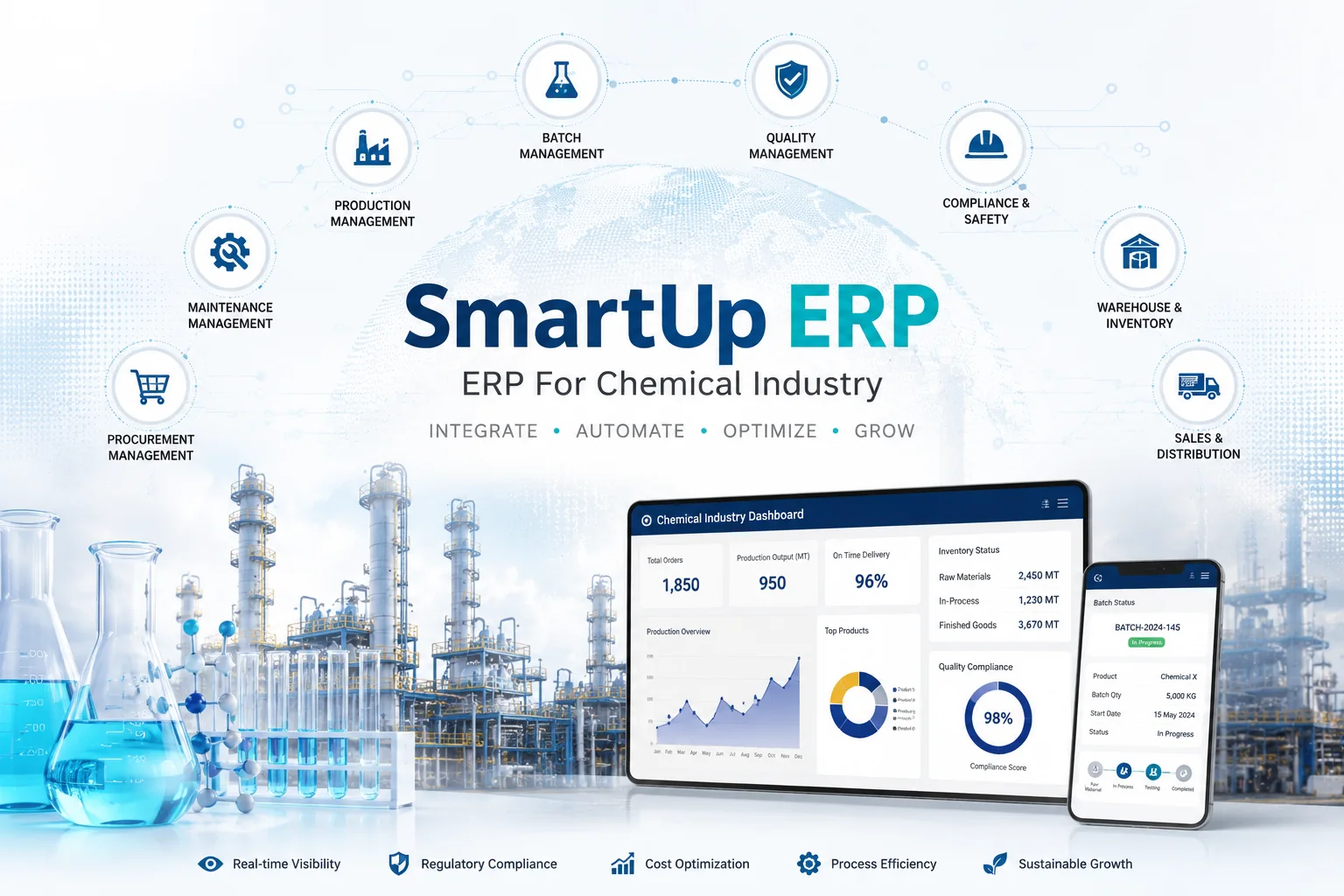
Chemical and process manufacturers must manage formulations, batch traceability, quality requirements, compliance documentation, and production control while maintaining operational efficiency.
Managing multiple formula revisions, approvals, customer-specific variants, and development changes often leads to inconsistencies and production errors.
Tracking raw materials, intermediate batches, blending activities, and finished goods becomes difficult without complete batch-level visibility.
Regulatory records, quality documents, production logs, and audit requirements create significant administrative overhead.
Candidate evaluation, feasibility reviews, sample submissions, and customer approvals are often managed through disconnected processes.
Teams struggle to monitor material consumption, batch progress, production status, and yield performance in real time.
Maintaining accurate inventory for raw materials, packaging materials, intermediates, and finished goods requires stronger process control.
Chemical and process manufacturers often manage formulation development long before production begins.
Candidate formulations, feasibility studies, sample submissions, customer approvals, formula revisions, and production readiness must be controlled through structured workflows to ensure consistency and reduce development delays.
Without centralized visibility, teams struggle with version confusion, approval bottlenecks, and inconsistent execution between development, quality, and production departments.
Capture formulation ideas, candidate records, and feasibility assessments before development begins.
Manage sample creation, customer submissions, feedback cycles, and approval workflows through a structured process.
Track revisions, maintain historical versions, and ensure teams work from approved formulations.
Approved formulas can flow into BOM creation, material planning, batch production, and finished goods manufacturing.
Chemical and process manufacturers must maintain visibility across raw materials, production batches, quality checks, blending activities, finished goods, and compliance documentation. Accurate traceability improves operational control while supporting customer, audit, and regulatory requirements.
Track material receipts, supplier lots, inventory movement, and consumption records throughout the production lifecycle.
Maintain complete visibility into production batches, blending operations, intermediate stages, and finished goods generation.
Link quality observations, approvals, testing results, and release decisions directly with production batches.
Maintain structured records for audits, customer requirements, quality procedures, and operational compliance processes.
Connect finished products back to source materials, production activities, and approved formulations for complete operational visibility.
Access historical production records, batch history, approvals, and documentation whenever verification is required.
Chemical and process manufacturing environments require far more than inventory and production tracking.
Formula development, batch execution, quality processes, compliance requirements, inventory visibility, and production control must operate within a connected ecosystem to ensure consistency, traceability, and operational efficiency.
A purpose-built ERP platform helps organizations manage development activities, production workflows, material consumption, and regulatory documentation through a centralized system.
Manage candidate formulations, revisions, approvals, version history, and production-ready formulas from a centralized repository.
Execute controlled batch production processes, monitor material consumption, and improve production visibility.
Record inspections, approvals, observations, and quality decisions throughout the manufacturing lifecycle.
Maintain structured production records, batch history, approvals, and audit-ready documentation.
A structured ERP platform helps chemical manufacturers improve formula governance, production visibility, inventory control, compliance readiness, and decision-making across the organization.
Control formulation revisions, approvals, version history, and production-ready recipes through structured workflows.
Maintain visibility from raw materials to finished goods while supporting quality and compliance requirements.
Improve consistency by connecting quality checks, approvals, observations, and release processes with production activities.
Maintain organized documentation, batch records, approvals, and operational history to simplify audits and regulatory reviews.
Track raw materials, intermediates, packaging materials, and finished goods through one centralized system.
Access operational insights covering formulations, production, inventory, quality, and business performance from real-time reports and dashboards.
Chemical manufacturing requirements vary across formulations, compliance standards, production methods, and quality processes. ERP systems must support operational complexity while maintaining traceability, control, and business visibility.
Manage formulations, sample approvals, version control, blending operations, and finished product traceability.
Support complex formulations, controlled production processes, quality validation, and documentation requirements.
Improve batch visibility, inventory control, material planning, and operational consistency across manufacturing operations.
Track formulations, production batches, quality specifications, and raw material consumption through structured workflows.
Manage recipes, production planning, batch execution, inventory movements, and compliance documentation.
Maintain traceability, formulation control, quality records, and production visibility across ingredient manufacturing processes.
Compare how a Chemical ERP platform improves formulation management, batch traceability, quality control, compliance documentation, and operational visibility compared to disconnected tools and manual processes.
Chemical manufacturing involves multiple controlled stages, from formulation development and approval to batch production, quality validation, and finished goods creation. A connected ERP platform helps maintain visibility, traceability, and control throughout the lifecycle.
New formulation ideas, customer requirements, and development opportunities are captured and organized for evaluation.
Technical viability, raw material availability, cost implications, and development requirements are reviewed before formulation begins.
Samples are developed, tested, shared, and evaluated through structured approval and feedback workflows.
Approved formulations are secured, version-controlled, and maintained through controlled access and revision management.
Authorized teams access approved formulas, review inventory availability, and prepare production-ready configurations.
Production executes using approved formulas while maintaining batch-level traceability, process consistency, and material control.
Material consumption, stock movements, and inventory balances are updated automatically as production activities are completed.
Quality approvals, batch records, finished goods generation, and compliance documentation remain fully connected.
Common questions about ERP software for chemical and process manufacturing businesses.
Production planning, inventory control, costing, batch tracking, quality management, and operational visibility.
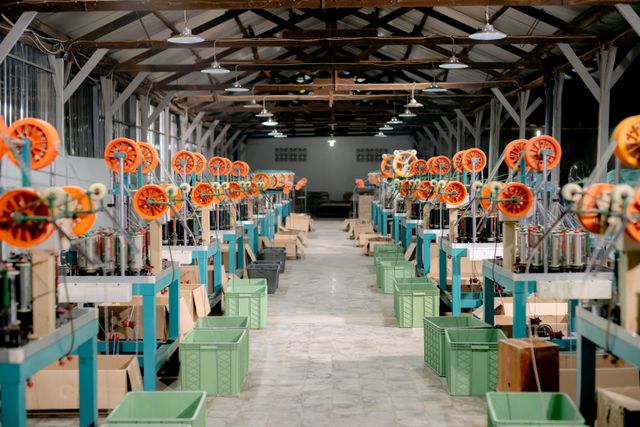
Manage procurement, inventory, warehouses, order fulfillment, dispatches, logistics, and multi-location distribution operations.

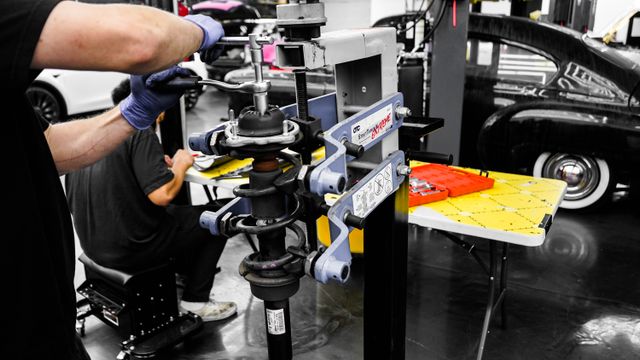
Manage service contracts, support tickets, field operations, customer requests, billing, and operational visibility.
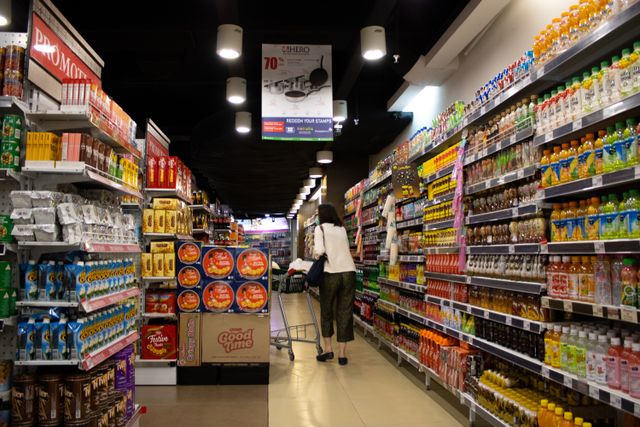
Manage distributors, sales teams, inventory movement, schemes, demand forecasting, and retail distribution.
Discover how SmartUp ERP can help chemical and process manufacturers manage formulations, batch production, traceability, inventory, quality processes, and compliance requirements through a connected system.
Version control and secure formulation workflows
Raw material to finished goods visibility
Structured documentation and audit support
Connected production and inventory operations